

Baby & Kids Nutrition
Pure A2 Gir Cow Ghee for babies and growing children in India. NABL lab tested on every batch, QR traced to source, packed in glass and completely free from preservatives, synthetic colour and additives. The safest verified ghee for your child's first foods.
-
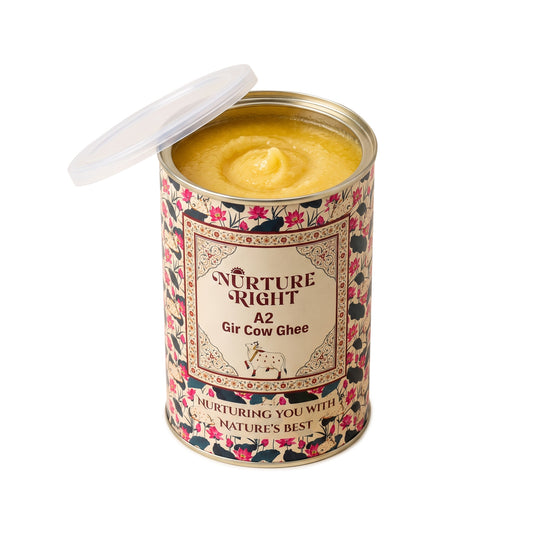
Nurture Right A2 Gir Cow Ghee - Pure and Natural Ghee for Health Benefits
Rs. 2,795.00Rs. 2,190.00Sale -

 Sale Best Seller
 -


Why Pure Ghee Is Non-Negotiable in Early Childhood Nutrition
The brain is approximately 60 percent fat by dry weight. From birth through age five, the critical window of neurological development depends entirely on consistent, adequate dietary fat of the right quality. Fat also enables absorption of vitamins A, D, E and K — all fat-soluble, none of which can be absorbed by the body without a fat carrier present in the same meal. A child eating vegetables without a quality fat source is absorbing a fraction of the nutrition those vegetables contain.
Traditional Indian weaning diets have included pure cow ghee since the earliest recorded period in Ayurvedic medicine — not as a custom but as a nutritional necessity that modern science now fully supports. The question in 2026 is not whether to give ghee to your child. It is which ghee, and how do you verify it.
Why A2 Gir Cow Ghee Specifically for Babies
Most commercial ghee in India is produced from mixed or crossbred cows whose milk contains A1 beta-casein protein. When A1 protein is digested, it releases a peptide called BCM-7. Infant gut lining is more permeable than adult gut lining, which means BCM-7 absorption is higher in babies than in adults. A2 beta-casein protein from pure Gir cows does not release BCM-7 during digestion.
This is why parents consistently find their children tolerate A2 Gir Cow Ghee better than regular commercial ghee. Nurture Right verifies A2 protein content through NABL accredited laboratory testing on every single production batch. The QR code on every jar links to that specific batch's test report — not a general brand certificate, not a sample from a previous year. Your batch, your jar, your result, verified in ten seconds on your phone.
What Each Serving Provides Your Child
Every serving of Nurture Right A2 Gir Cow Ghee provides Vitamin A at 438 IU supporting eye development, immune function and skin integrity. Vitamin D at 15 mcg is essential for bone development and calcium absorption — deficiency is widespread in Indian children despite high sun exposure, making dietary sources critical. Vitamin E provides antioxidant protection for developing cells. Vitamin K2 supports bone mineralisation. Butyric Acid nourishes the gut lining whose integrity directly determines a child's immune strength throughout development. A digestibility rate of 96 percent makes it the most bioavailable fat source available in any food.
How to Introduce A2 Ghee to Babies and Children
From six months, when solid foods begin, start with one quarter teaspoon stirred into soft cooked rice, dal or vegetable puree. Ghee adds caloric density appropriate for an infant's high energy needs and simultaneously improves absorption of every fat-soluble vitamin in the same bowl. For toddlers between one and three years, half to one teaspoon per day added to food is the recommended daily amount. For older children, use A2 Gir Cow Ghee as the daily cooking fat for rotis, parathas, eggs and lentils. The gajar ka halwa with A2 ghee is a practical nutrient-dense sweet for children from age one onwards. For the complete nutritional case, read the detailed guide on A2 Gir Cow Ghee benefits for children.
Why Glass Packaging Matters for Baby Food
Fats absorb plastic-derived compounds including microplastics more readily than water-based foods. Heating ghee stored in plastic or transferring it to plastic containers increases this absorption significantly. Every Nurture Right product is packed in food-grade glass with automated airtight sealing — because the purity verified in the NABL laboratory should reach your child's bowl intact.
Important Note on Honey for Infants
Raw honey must not be given to children under 12 months of age due to the risk of infant botulism. Nurture Right Pure Acacia Honey is available for children above 12 months and adults but does not form part of this infant nutrition collection.